Project vs Task
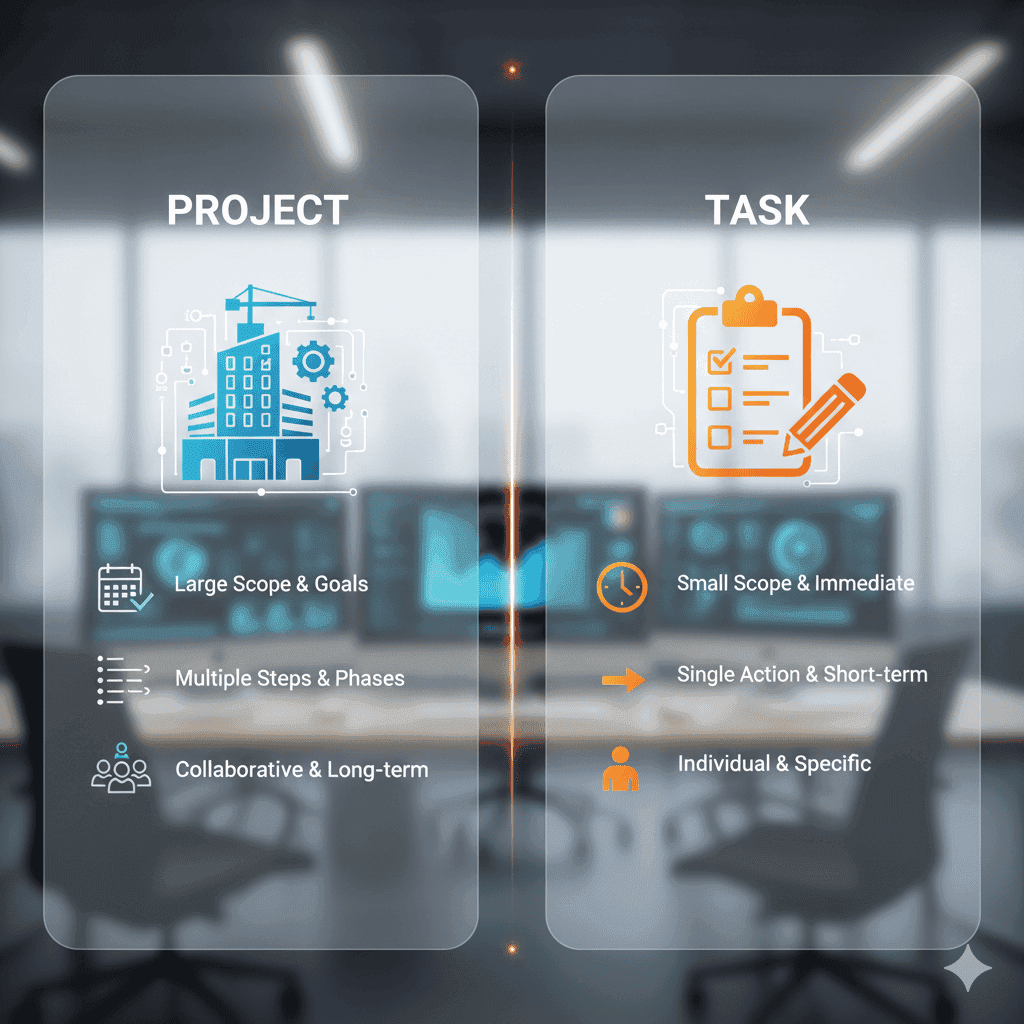
Table of Contents
Project vs. Task: How They Differ
Project vs. task: what exactly is the difference?
A project is a larger objective that requires planning and multiple steps to complete. Projects often have specific deadlines and can include a variety of tasks.
A task is a single action or step within a project. Tasks are the building blocks that make up a project, and they must be completed to reach the project's goal.
For example, launching a new website is a project that might involve tasks such as designing pages, writing content, and testing functionality.
There are tools available, like an AI digital assistant, that can help break down complex projects into manageable tasks and keep you on track for successful project completion.
Understanding Projects vs. Tasks
While these terms are often used interchangeably in daily conversation, they represent distinctly different concepts in productivity management. Knowing what sets them apart helps you approach your work more strategically and allocate your time more effectively.
Project Definition
A project represents a significant undertaking with multiple moving parts that work together toward a specific goal.
Think of planning a birthday party for your child:
You need to book a venue, send invitations, order the cake, plan activities, and coordinate with other parents. Each of these elements contributes to the larger objective of throwing a successful party.
Projects typically have defined start and end dates, call for specific deliverables, and require coordination across different areas. They often involve multiple people and resources. The complexity requires careful planning and oversight to ensure everything comes together properly and on schedule.
Task Definition
Tasks are the individual actions or steps within a project that need to be completed. They're specific, actionable items that you can check off your list.
Calling the bakery to order a cake is a task. Sending an email to confirm the party venue is a task. These single actions have clear beginning and end points, and you can usually complete them in one sitting.
The beauty of tasks lies in their simplicity. You know exactly what needs to be done, and once it's finished, you can move on to the next item. Tasks don't require extensive planning or coordination; they just need execution. Whether it's picking up groceries, responding to an email, or dropping kids off at soccer practice, tasks form the backbone of our daily activities.
Key Differences To Know
Recognizing the distinctions between projects and tasks helps you approach each type of work with the right mindset and tools. The differences go beyond just size or complexity; they fundamentally change how you should plan, execute, and track your progress.
Scope and Complexity
Projects encompass broad objectives that require strategic thinking and planning.
Organizing a family reunion involves coordinating schedules, booking accommodations, planning meals, arranging activities, and managing communications with multiple family members. Each element interconnects with others, creating a web of dependencies.
Tasks, on the other hand, have a narrow, focused scope. Calling Aunt Mary to confirm she's coming to the reunion is a straightforward task with a clear outcome.
The complexity of projects means they often evolve as you work through them. New requirements emerge, priorities shift, and unexpected challenges arise. Tasks remain relatively stable. Once defined, they rarely change significantly.
Timelines and Deadlines
Projects stretch across weeks, months, or even years, while tasks typically wrap up in minutes or hours.
Planning your child's college applications is a project that might span their entire junior and senior years of high school. Within that project, individual tasks such as requesting transcripts or writing essays have much shorter timelines.
Projects require milestone markers to gauge progress over time. You can't just check them off a list; you need to monitor ongoing advancement toward the final goal. Tasks offer immediate satisfaction with their quick completion cycles. You start, you finish, and you move on.
Deadline management also differs significantly. Project deadlines often have some flexibility built in, with buffer time for unexpected delays. Task deadlines tend to be more rigid.
Understanding the Difference Leads to Better Planning
Understanding whether you're dealing with a project or a task directly impacts your success in managing both work and personal life. Projects demand upfront investment in planning: mapping out all the components, identifying dependencies, and creating realistic timelines. The same principles apply to any project, whether it's organizing a neighborhood event or launching a side business. Tasks benefit from simple listing and prioritization. A daily to-do list works perfectly for tasks, as you can see what needs doing and knock items out one by one.
Projects need more sophisticated planning tools that show relationships between different elements and track progress over time.
Project updates require context and progress reports. Task updates are usually binary: done or not done. Recognizing this helps you share information more effectively with family members, coworkers, or anyone else involved in your activities. Better planning through proper categorization reduces stress and increases your chances of success.
Tips for Managing Projects and Tasks
Successfully handling projects and tasks requires different strategies and approaches. The key lies in using the right techniques for each type of work while maintaining overall balance in your schedule. Modern tools and methods can significantly simplify this process, especially when you're juggling family, work, and personal commitments.
Use an AI Personal Assistant
An AI personal assistant can simplify both family and professional project management by helping organize schedules, sending reminders, and tracking progress across multiple tasks.
For work, it can prioritize deadlines, streamline communication, and keep projects on track with automated updates.
At home, it can coordinate family calendars, manage shopping or chore lists, and ensure nothing important slips through the cracks. By reducing your mental load and improving organization, an AI assistant helps you stay focused on completing projects efficiently.
Setting Clear Milestones
Milestones transform overwhelming projects into achievable steps. Instead of facing "plan summer vacation" as one massive item, you create checkpoints: research destinations by March 1, book flights by March 15, reserve accommodations by April 1.
Each milestone represents meaningful progress toward your goal while providing natural pause points to assess and adjust your approach.
Effective milestone setting requires realistic time management skills. Consider both the effort required and the availability in your schedule. Building in buffer time prevents the domino effect when one milestone slips.
The satisfaction of reaching milestones maintains momentum through long projects. Celebrate the wins, even small ones. This positive reinforcement keeps you motivated through the entire project.
Tools for Planning and Tracking
The right tools make all the difference in managing projects and tasks effectively. Today's options range from simple list apps to sophisticated project management platforms. The key is finding tools that match your needs without adding unnecessary complexity to your life.
Digital Assistants
Modern digital assistants, like O from Ohai.ai, offer far more than basic calendar management. They understand context, learn from your behavior, delegate tasks, and proactively suggest solutions to scheduling conflicts.
The best digital assistants integrate seamlessly with your existing tools and workflows. They should feel like a natural extension of how you already work, not another system to learn.
These tools can even handle routine communications, like confirming appointments or sending updates to family or team members about schedule changes.
Look for options that offer voice commands, mobile apps, and automatic syncing across devices. The ability to share specific information with family or team members while keeping other details private adds essential flexibility.
Collaboration Platforms
When multiple people are involved, shared platforms are essential for project and task management. The right collaboration tools ensure everyone knows their responsibilities and can track overall progress.
The ability to assign tasks, set due dates, and track completion helps distribute work fairly and holds everyone accountable. Real-time updates prevent the confusion that comes from outdated information.
Tracking Progress and Measuring Success
Tracking tasks often relies on simple methods like checklists or completion rates, offering immediate feedback on productivity. Projects, however, demand broader metrics such as milestone achievement, budget adherence, and timeline progress. Tools such as Gantt charts, dashboards, or kanban boards make progress visible to all stakeholders. Success is best measured by aligning outcomes with original goals, whether that means finishing a home renovation within budget or launching a product on schedule. Reviewing data from past efforts ensures more accurate planning and smarter execution. Project vs. Task: Closing Thoughts Understanding the project vs. task distinction transforms how you approach personal planning and family organization.
Projects require strategic thinking, careful planning, and sustained effort over time. Tasks need focused execution and efficient completion. Recognizing which one you're dealing with helps you apply the right tools and techniques for success.
Ready to simplify your family's schedule management? Try Ohai.ai today to see how an AI assistant can transform your project and task management. With smart scheduling and automated reminders, O allows you to focus on spending quality time with your family while staying on top of all your commitments.
Frequently Asked Questions
What makes a task a project? A task becomes a project when it involves multiple steps, defined goals, resources, and a set timeline. Unlike a simple task that can be completed in one action, a project requires coordination of people, tools, and processes to achieve a larger outcome or deliverable.
What is the difference between a task and an activity in a project? A task is a specific unit of work with a clear deliverable, while an activity refers to a group of related tasks contributing to a broader goal. Activities provide structure by organizing tasks into meaningful phases, helping teams track progress toward project completion more effectively.
What is the difference between a project plan and a task list? A project plan outlines the entire scope, objectives, timelines, roles, and resources needed for success. A task list, by contrast, is a more detailed breakdown of individual actions required to execute the plan. Together, they ensure strategy and execution remain aligned throughout the project.
What is the difference between a performance task and a project? A performance task is a focused activity designed to demonstrate specific knowledge or skills, often used in learning or assessment. A project is broader, involving multiple tasks, collaboration, and deliverables over time. While performance tasks measure ability, projects produce tangible results.