Why Moms Are Done Using ChatGPT as a Co-Parent (And Which Tool Actually Works)
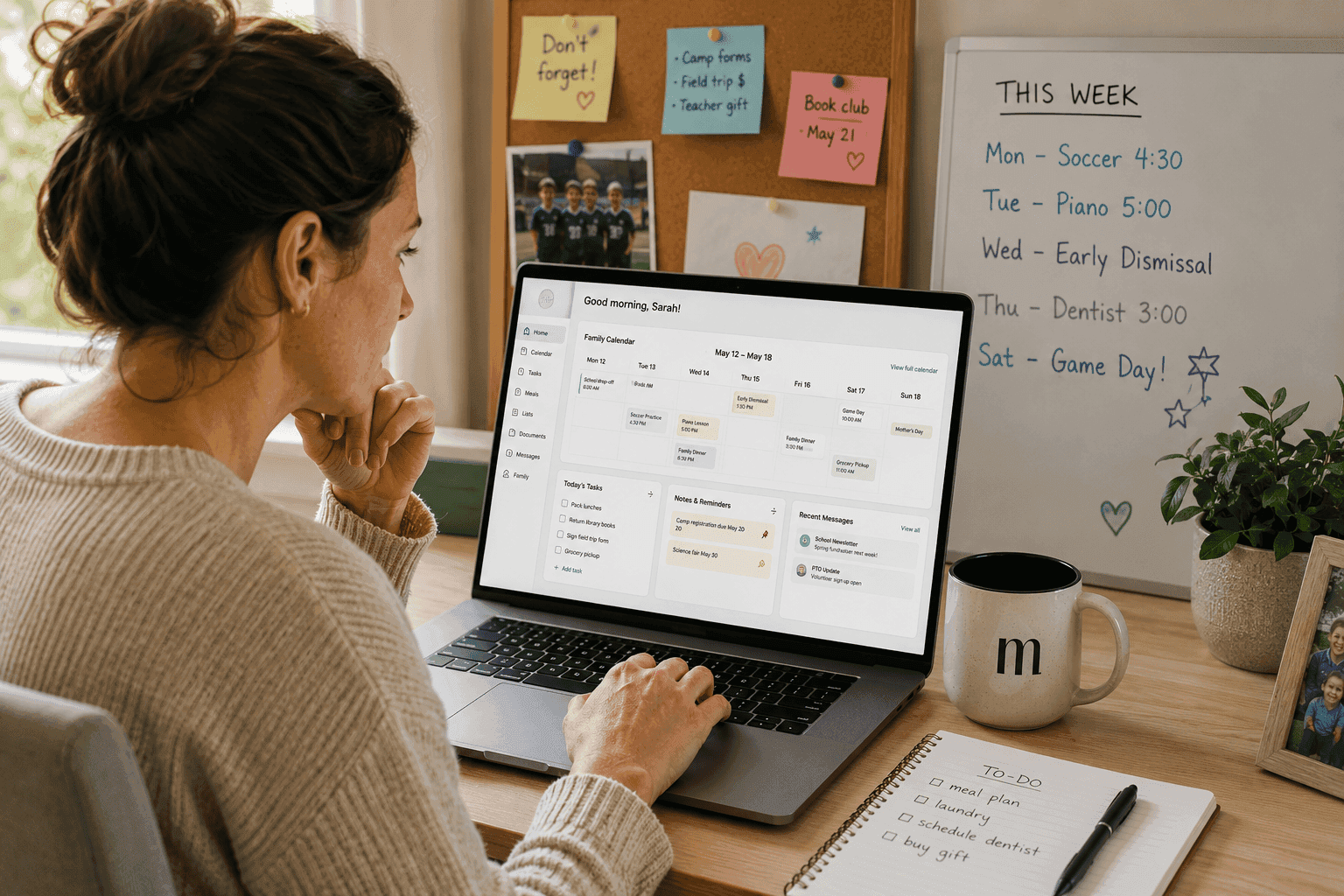
Table of Contents
- The Rise of the "AI Co-Parent"
- What Parents Are Actually Asking ChatGPT To Do
- The Hidden Work of Using ChatGPT as a Household Manager
- The Best Household Management App for Families Is Not ChatGPT nor Claude
- How the Best App to Organize Your Family Goes Beyond a Chatbot
- From Care.com to Ohai: Why Sheila Marcelo Built a Household Manager
- An App to Reduce Household Mental Load for the Whole Family
- Do You Actually Need a Household Manager?
- The Real Question Is Not About the Tool
- Frequently Asked Questions About the AI Co-Parent Trend
Across TikTok and parenting groups, moms are turning ChatGPT into a "digital co-parent" to carry the mental load. Here's why a purpose-built household manager, not a general chatbot, is the tool families actually need.
A few years ago, the idea of calling a chatbot your co-parent would have sounded absurd. Today, it is becoming a genuine trend.
Across TikTok, Instagram, Substack, and parenting communities, mothers are sharing how they use ChatGPT to plan meals, organize school schedules, summarize emails, brainstorm bedtime routines, create packing lists, and manage the countless details that keep family life running. Some creators have even built entire businesses teaching other parents how to turn ChatGPT into what they call a "digital co-parent" or an AI household manager. At first glance, this trend seems like a story about technology. It is actually a story about mental load and the toll of invisible labor.
When you look closely at what parents are asking ChatGPT to do, very little of it involves parenting itself. They are not asking it to teach values, comfort a child after a hard day, or help navigate a difficult conversation. They are asking it to remember, organize, coordinate, and keep things from falling through the cracks. From meal planning and school emails to family schedules, reminders, and household task management, parents are turning to technology to manage the invisible work of running a household. This is the mental load checklist no one talks about, and it is exhausting.
In other words, they are asking it to do the work of a second brain. And that raises a fascinating question: if thousands of parents are turning a general-purpose chatbot into a household manager, what does that say about the tools families actually need? Chatbots like ChatGPT were not built for families. They forget everything between sessions, and only help whoever is doing the prompting. A purpose-built household manager works for your whole household. Everyone's calendars stay synced, kids and partners get their own reminders, and anyone can ask "what time is soccer practice?" without texting mom. The mental load stops sitting on one person's shoulders because the second brain is accessible to the whole family.
The Rise of the "AI Co-Parent"
The phrase "AI co-parent" is provocative, which is probably part of the reason it has spread so quickly. But despite the headlines, most parents are not looking for a replacement parent.
They're looking for relief.
For many mothers, especially those carrying the role of default parent, the challenge isn't a lack of love, effort, or commitment. The challenge is that family life requires an astonishing amount of remembering.
Remembering when soccer registration opens. Remembering to RSVP to the birthday party. Remembering that your daughter needs cupcakes for school on Thursday. Remembering to schedule the dentist appointment. Remembering that camp forms are due next week. Remembering that your mother-in-law's birthday is coming up. Remembering that there are no snacks left in the pantry.
The list never ends.
One of the most common themes emerging from discussions around ChatGPT and parenting is not that it provides brilliant answers. Rather, it provides relief from the burden of having to hold every detail in your head. That feeling resonates deeply with many parents.
As one Ohai user explained:
"Women in particular and moms especially, we just cannot turn our brains off. We're constantly thinking of who needs what, when do they need it. Having a place that holds that for you takes a huge amount of stress off."
The rise of the "AI co-parent" is not really about artificial intelligence. It is about reducing the mental load. Mental load refers to the invisible labor involved in anticipating needs, planning ahead, remembering details, and coordinating responsibilities. No one notices when you remember to order the birthday gift three weeks early. No one sees you mentally tracking three different pickup schedules while responding to emails at work. No one applauds the fact that you remembered camp registration opened at 8:00 a.m. and signed up before spots filled. And, of course, no one pays you to do any of it.
Many parents describe feeling less overwhelmed by the tasks themselves than by the constant responsibility of remembering them.
As another Ohai user put it:
"Things were falling through the cracks. I felt like I needed a second brain."
That quote captures the emotional center of this entire trend. Parents are not looking for more productivity hacks. They are looking for somewhere to put the information they can no longer carry alone.

What Parents Are Actually Asking ChatGPT To Do
When people hear the term "co-parent," they often imagine emotional guidance, childcare support, or parenting advice. But that's not what most parents are using these tools for. Here's a closer look at the tasks commonly being outsourced.
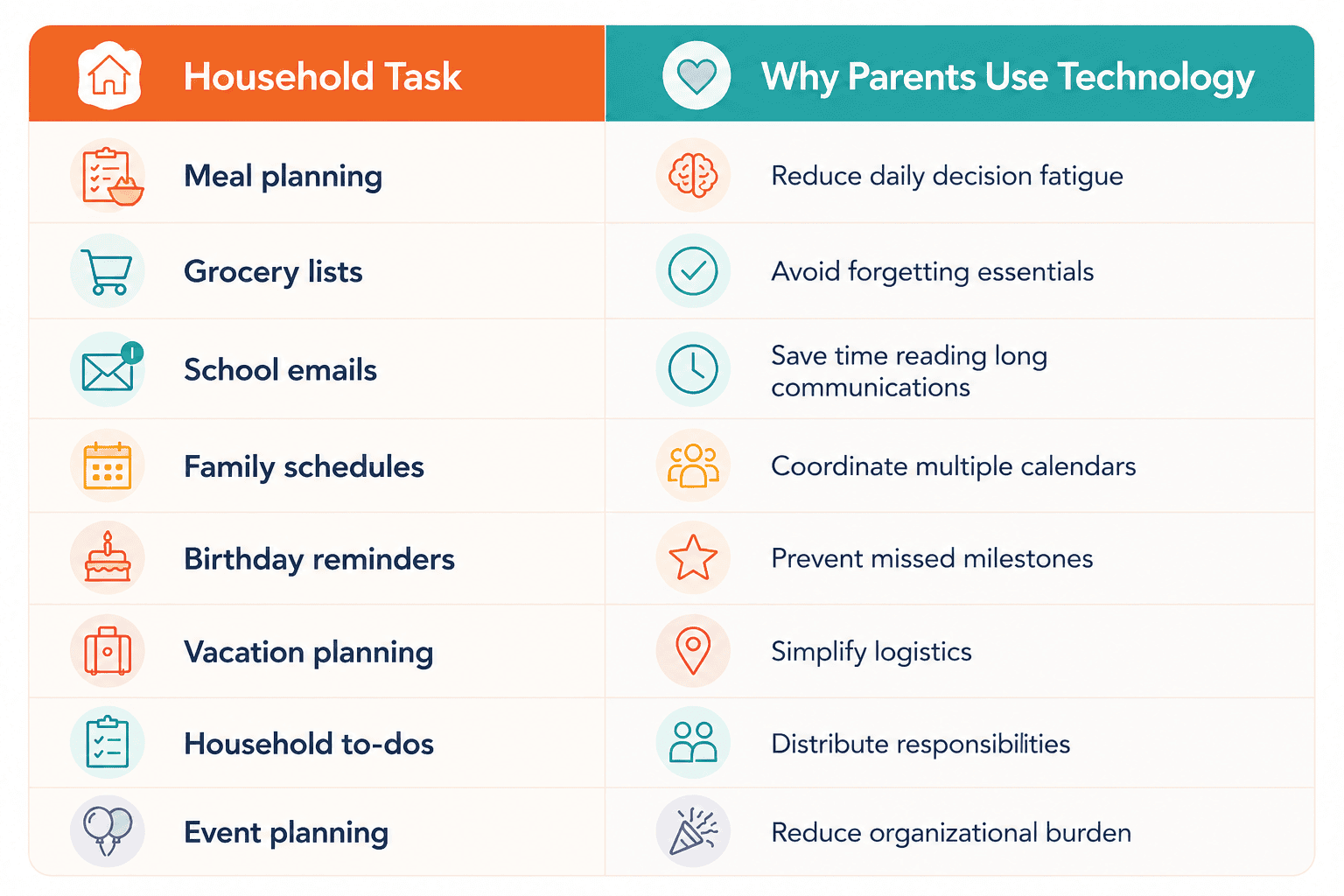
Notice something important. These aren't parenting tasks — they're household management tasks. This distinction matters because it reveals what families are truly struggling with. The challenge isn't caring for children. It's managing the operational complexity of modern family life. A household today often functions like a small organization. There are schedules, communications, deadlines, logistics, stakeholders (a nanny or a grandparent even), projects, and recurring responsibilities. Yet most families are still managing all of it through a patchwork of calendars, emails, text messages, sticky notes, spreadsheets, and memory.
No wonder people are looking for a household management solution.
The Hidden Work of Using ChatGPT as a Household Manager
Here's the irony. Even as ChatGPT helps many parents manage household responsibilities, it often creates new work of its own. To use ChatGPT effectively for family management, many parents find themselves creating detailed prompts, saving custom instructions, copying information between tools, re-entering dates into calendars, building workflows, managing multiple apps simultaneously, and maintaining separate systems for schedules, reminders, and lists.
And that is before the bill arrives. Because hacking together a household assistant from a general-purpose chatbot means hitting walls fast. The free tier forgets your instructions. The features you actually need, like memory, longer context, and document scanning, sit behind paid upgrades. Parents who go deep into this system often find themselves paying high prices for multiple tiers and integrations before getting anywhere close to what they actually need, and even then, the setup never ends.
For some families, this works. However, most parents are not simply looking for advice. They are looking for action. A chatbot can tell you not to forget soccer registration, but someone still has to add the deadline to a calendar, create a reminder, and coordinate family schedules across multiple calendars to check who is free for pick-up and drop-off.
The reminding is helpful. The automated coordination across your whole household is what actually saves time.
The Best Household Management App for Families Is Not ChatGPT nor Claude
Chatbots like ChatGPT or Claude are some of the most powerful productivity tools ever built. They can write code, draft presentations, analyze spreadsheets, summarize research, and help teams move faster at work. But productivity at the office and coordination at home are fundamentally different problems.
Think of it this way: you would not hire a brilliant executive assistant to be your nanny. Not because they are not capable, but because the job requires different skills, different instincts, and different context. The same logic applies here. ChatGPT was designed to make individuals and teams more productive. A household manager like Ohai was designed to make families run smoothly.
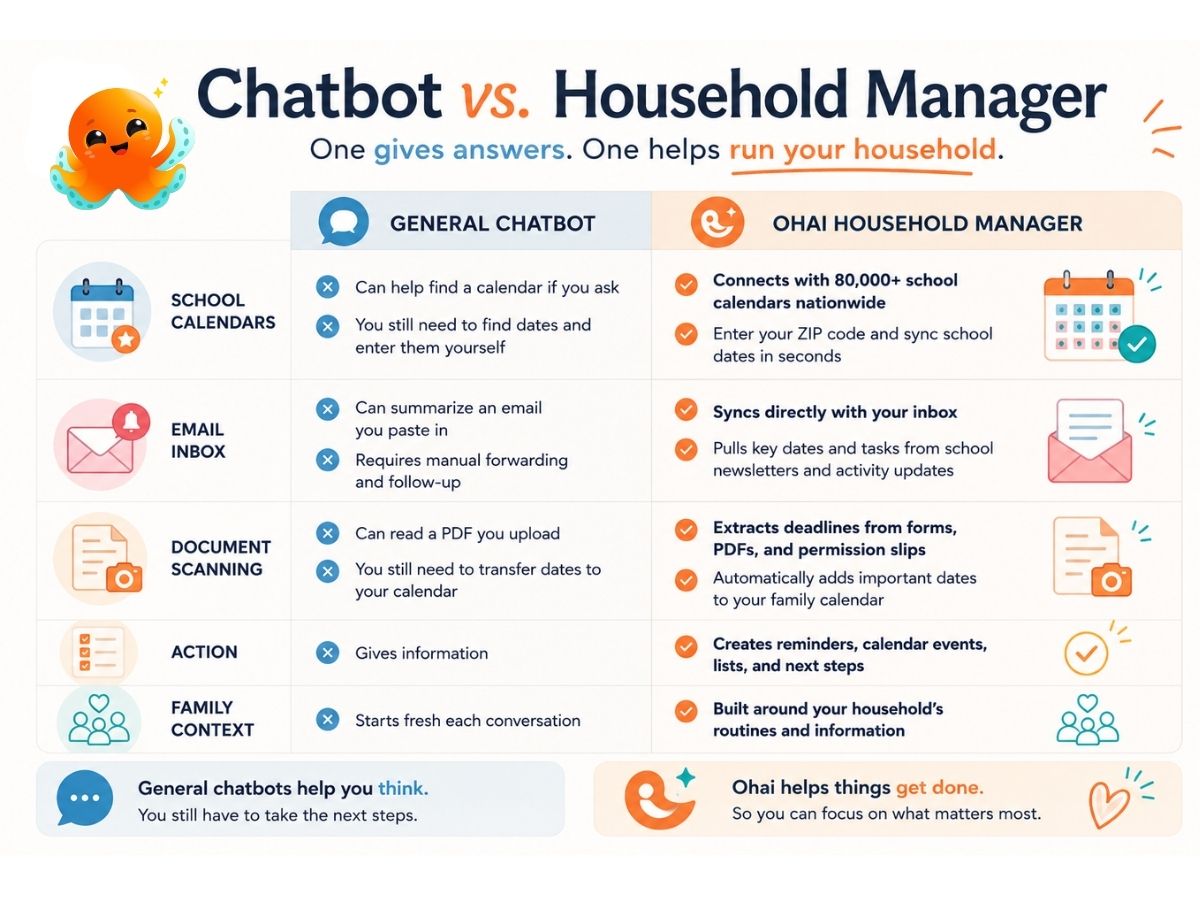
Built specifically for how families organize
That difference shows up in the details. Take school calendars. Keeping track of half-days, early dismissals, teacher workdays, and holiday breaks is one of the most common pain points for parents. Ohai has built direct connections with over 80,000 school calendars across the country. You enter your zip code, find your school, and every date syncs to your calendar in seconds. Ohai also syncs directly with your email inbox to catch school newsletters, PTO updates, and activity reminders, then pulls out the key dates and tasks to share with the whole household, so you do not have to dig through messages yourself. Document scanning works the same way: snap a photo of a camp form or forward a PDF, and O extracts every deadline and adds it to your family calendar automatically.
The integrations reflect where family life actually happens. Grocery lists connect to your Instacart account. Shared calendars keep everyone on the same page. Reminders go out to the right person at the right time. Lists are visible to all members of the family, making collaboration easy. Through working closely with real parent users, Ohai is actively building connections with parenting apps like TeamSnap and ClassDojo to help consolidate the fragmented communication channels that overwhelm families today. Every feature exists because real parents asked for it. ChatGPT is building for the broadest possible audience, targeting billions of users worldwide. Ohai is building specifically for the needs of busy families.
A digital home management system that keeps your data private
There is another difference worth knowing about. By default, OpenAI uses ChatGPT conversations to train and improve their models. Users can opt out in settings, but most never realize it is on. Ohai operates as a closed system. Your family's data stays in your account, is not shared with third parties, and is never used to train any language model. For a tool that holds your children's schedules, medical reminders, home addresses, and daily routines, that distinction matters.
How the Best App to Organize Your Family Goes Beyond a Chatbot
AI coupled with real human support
One of the most overlooked differences between a chatbot and a purpose-built household manager is what happens when something goes wrong. With ChatGPT, you are on your own. If a prompt fails, you rework the instructions, test different phrasing, and hope the next attempt sticks. If the output is wrong, you catch the mistake yourself. That process takes time, sometimes more time than just doing the task manually. Spending twenty minutes debugging a chatbot to save ten minutes on a grocery list is not a win.
Ohai has a human team behind the technology. Users can ask for a real person anytime, whether something needs fixing, a question comes up, or the AI gets something wrong. The team also reviews the AI's work to catch errors and prevent hallucinations, which are common across all large language models. That layer of oversight means you are not left wondering whether a calendar date is accurate or whether a reminder was actually set. Managing a household is far more personal than managing a team at work. Every family runs differently, and having people who understand that behind the scenes adds a level of reliability and care that a chatbot simply cannot match.
A human team to help get you set up and teach you how to use it
A parent juggling a full-time job, shifting work schedules, and everything happening at home does not have time to figure out another app. Ohai is designed to work with minimal setup, and it offers something no other household management tool does: one-on-one calls with the team to walk you through your account, help you build a system that fits your family, and teach you how to get the most from it. For many parents, this is their first real experience using AI tools in daily life. Having a patient, knowledgeable person on the other end removes the learning curve entirely.
Because Ohai is not a tech giant, the team works directly with parents to shape the product. Family management is not a problem general-purpose chatbots like ChatGPT are prioritizing to solve. It is the only problem Ohai is solving, and the families who use it have a real voice in how it evolves.
From Care.com to Ohai: Why Sheila Marcelo Built a Household Manager
This is not an accident. Ohai was founded by Sheila Lirio Marcelo, who also founded Care.com, one of the largest platforms for family care in the world. Helping families is not a new market for her. It is the through line of her entire career. She built Ohai because she saw the same problem from a new angle: parents were drowning in invisible work, and the tools available to them were not designed to help.
As she puts it in her own words:
"I came to the realization that this mental load is so heavy. So why wouldn't I, which I've been doing throughout my career, use the power of technology to help families again. How does the beauty of this tool allow us to take things off our plate so we can be better parents, show up more, and take care of ourselves."
That context matters. The difference between a general-purpose chatbot and Ohai is not just a feature list. It is intentional. Ohai exists for one reason: to solve the specific, daily, unglamorous problems that families face. Much of the leadership team behind Ohai are the same parents and leaders who built Care.com, and they bring that same focus to every product decision.
An App to Reduce Household Mental Load for the Whole Family
This may be the most important difference. ChatGPT helps one person think more clearly. Ohai helps an entire household coordinate. When only one parent uses ChatGPT to manage family logistics, the mental load still lands on that person. They are still the one everyone turns to with "What time is the game on Saturday?" and "Where is drop-off tomorrow?"
With Ohai, anyone in the household can ask O, the AI household manager, directly. Kids check their own schedules. Partners get their own reminders. Nannies and grandparents sync their calendars so O knows who is available for pick-up and drop-off on any given day. The coordination that used to live entirely in one parent's head becomes accessible to everyone, and the load gets shared more evenly across the household.
This also opens the door for teenagers to take real ownership over their own deadlines, schedules, and responsibilities through Ohai, building habits around time management and accountability that benefit them far beyond the household.
Everything a chatbot can do, plus everything it cannot
Ohai layers on top of the same large language models that power ChatGPT and Gemini. Anything you were already doing with a chatbot — brainstorming gift ideas, meal planning for a busy family, finding local events this weekend, building a packing list for a weekend getaway, or coming up with game-day snacks — you can do through Ohai. The difference is that O takes action on it. That snack list goes straight to your Instacart account. That packing list becomes a shared list your partner can add to. Those event dates land on a synced family calendar everyone can see.
You get the intelligence of ChatGPT with the coordination, memory, and family-specific features it was never designed to offer.
Do You Actually Need a Household Manager?
Not every family needs a dedicated tool to run the household. Some families thrive with a shared Google Calendar and a whiteboard on the fridge. Others have systems that work, even if those systems live entirely inside one parent's head. If that is you, and nothing is falling through the cracks, keep going.
But if you have found yourself prompting ChatGPT at 11 p.m. to sort out tomorrow's schedule, or copying camp dates into a calendar while dinner burns, or texting your partner a screenshot of a reminder you set for yourself because there is no other way to share it, then the question is not whether you need help. The question is whether the tool you are currently using is enough.
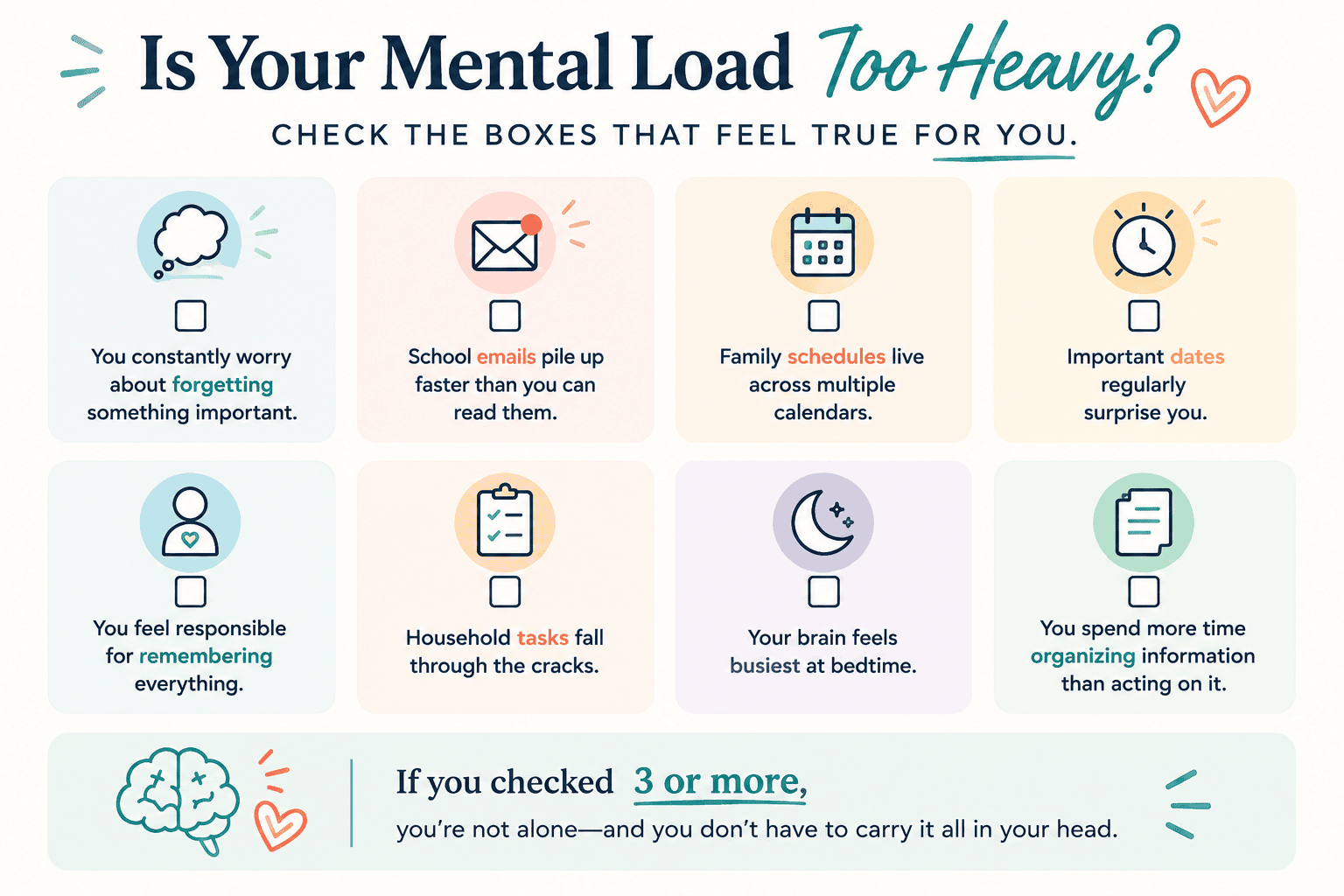
What it actually costs to build a co-parent from ChatGPT
The hidden cost of using ChatGPT as a household manager adds up faster than most parents expect. The free tier is limited: shorter memory, no file uploads, and conversations that reset frequently. To get the features that make family management even partially functional, like longer context, document scanning, and persistent memory, you need a paid plan. Add in the other apps you are stitching together to fill the gaps (a shared calendar app, a reminders tool, a grocery list app, a meal planner) and you can easily find yourself spending over a hundred dollars a month on a patchwork system that still requires you to be the one holding it all together.
Ohai starts free. The premium plan is under ten dollars a month, and it includes everything: calendar syncing, document scanning, email monitoring, shared lists, reminders, meal planning, Instacart integration, and human support. No surprise upgrades to unlock the features you actually need.
The Real Question Is Not About the Tool
The trend of moms building co-parents from ChatGPT is not really about ChatGPT. It is about a generation of parents finally saying out loud that the invisible work of running a household is real, it is relentless, and it is worth solving for. That is a meaningful shift, regardless of which tool you choose.
If ChatGPT is working for your family, use it. If you want something built from the ground up for the way families actually run, with shared access, real human support, and features designed around school calendars and soccer schedules, Ohai is worth trying.
You can start for free here and see if it's what you're looking for.
Frequently Asked Questions About the AI Co-Parent Trend
Why are so many mothers turning to ChatGPT for "co-parenting" help?
The trend isn't about replacing the human element of parenting; it is about seeking relief from the crushing weight of invisible labor. Mothers are using these tools to navigate the operational complexity of family life, from meal planning to tracking school forms. They are essentially building a second brain to manage the logistics and details that keep a household from falling through the cracks. For more on this, see our mental load checklist.
Can an app truly lighten the mental load at home?
Absolutely. A purpose-built tool does more than just list tasks; it actively organizes family schedules, extracts dates from school newsletters, and handles the constant "remembering" that usually sits on one person's shoulders. The goal isn't just productivity — it's about helping parents finally feel like they can turn their brains off.
What exactly defines a household management system for families?
Unlike tools built for the office, a household manager is designed for how families actually live. It consolidates fragmented channels like emails, sticky notes, and text messages into one shared space. It's a single destination for everything from grocery lists to camp registration deadlines, ensuring the whole family — not just mom — has the context they need. Learn how Ohai helps with managing a family.
What is the most effective tool to organize a busy family?
The best solution is one that stops the "app juggling." Rather than bouncing between separate tools for calendars, reminders, and PDFs, families thrive with a unified platform that offers automated coordination, document scanning, and shared visibility across every caregiver and child.
Is a standard chatbot sufficient for managing family life?
While ChatGPT can brainstorm ideas, it was never designed for family coordination. It often forgets details between sessions and requires constant, manual re-entry of information into other tools. A true household manager goes beyond advice to provide action, like automatically syncing soccer practices to a shared calendar.
How does a digital household manager differ from a basic chatbot?
A chatbot helps you think, but a household manager helps your family run. One is a conversation that happens in a vacuum; the other is a persistent system that maintains memory, connects to your real-world school calendars, and makes information accessible to everyone in the house simultaneously.
How do shared calendars transform family coordination?
They remove the need for constant texting about drop-offs and appointments. When everyone's family schedule is synced, the responsibility of tracking details is shared. This is especially vital for households with multiple caregivers, ensuring that no one has to constantly ask "what time is the party?"
Can technology actually handle the deluge of school emails?
Yes, and it's a game changer. Modern tools can monitor your inbox for newsletters and PTO updates, automatically identifying and extracting important dates and tasks. Instead of digging through threads, the deadlines land on your calendar without you lifting a finger. Here's how Ohai's email scanning works.
What constitutes an AI-driven home management system?
It is an integrated experience that layers intelligence over daily logistics. Rather than just answering prompts, it proactively manages reminders, schedules, and planning. It acts as a dedicated operational partner that keeps the unglamorous, daily details of family life moving smoothly.
Does a household manager help avoid scheduling overlaps?
By cross-referencing multiple calendars across the household, an AI scheduling assistant identifies conflicts before they cause stress. It allows you to see who is available for pickup or if a work meeting clashes with a school event, reducing the last-minute panic that often plagues busy parents.
What is the best app for organizing my family's daily life?
The best choice is a tool that democratizes information. If the system only works for one person, the mental load hasn't actually moved. Look for a platform that consolidates communication, meal plans, and documents into a shared space that the whole family can access and use.
Is there a more effective alternative to using ChatGPT as a "co-parent"?
For parents seeking real action rather than just conversation, a dedicated household manager like Ohai is a superior fit. While ChatGPT provides the "intelligence," Ohai provides the coordination, family-specific features, and human support required to actually take tasks off your plate.