Dads Carry Mental Load Too. It's Time We Talked About It.

Table of Contents
- The Numbers Behind the Father's Mental Load
- What Fathers Are Actually Managing
- The Story We Keep Telling About Dads
- Paternal Postpartum Depression: The Mental Health Piece That Usually Gets Left Out
- What Actually Helps Reduce the Mental Load
- Tools and Resources to Help Manage the Mental Load
- Self-Assessment: A Cognitive Load Checklist for Parents
- Both Parents Deserve to Feel Seen
- Frequently Asked Questions About Fathers and Mental Load
- Related Reading
The clueless-dad trope makes for an easy joke, but a third of fathers report burnout. Here's the data on the father's mental load, what dads are actually carrying, and how families can share the weight together.
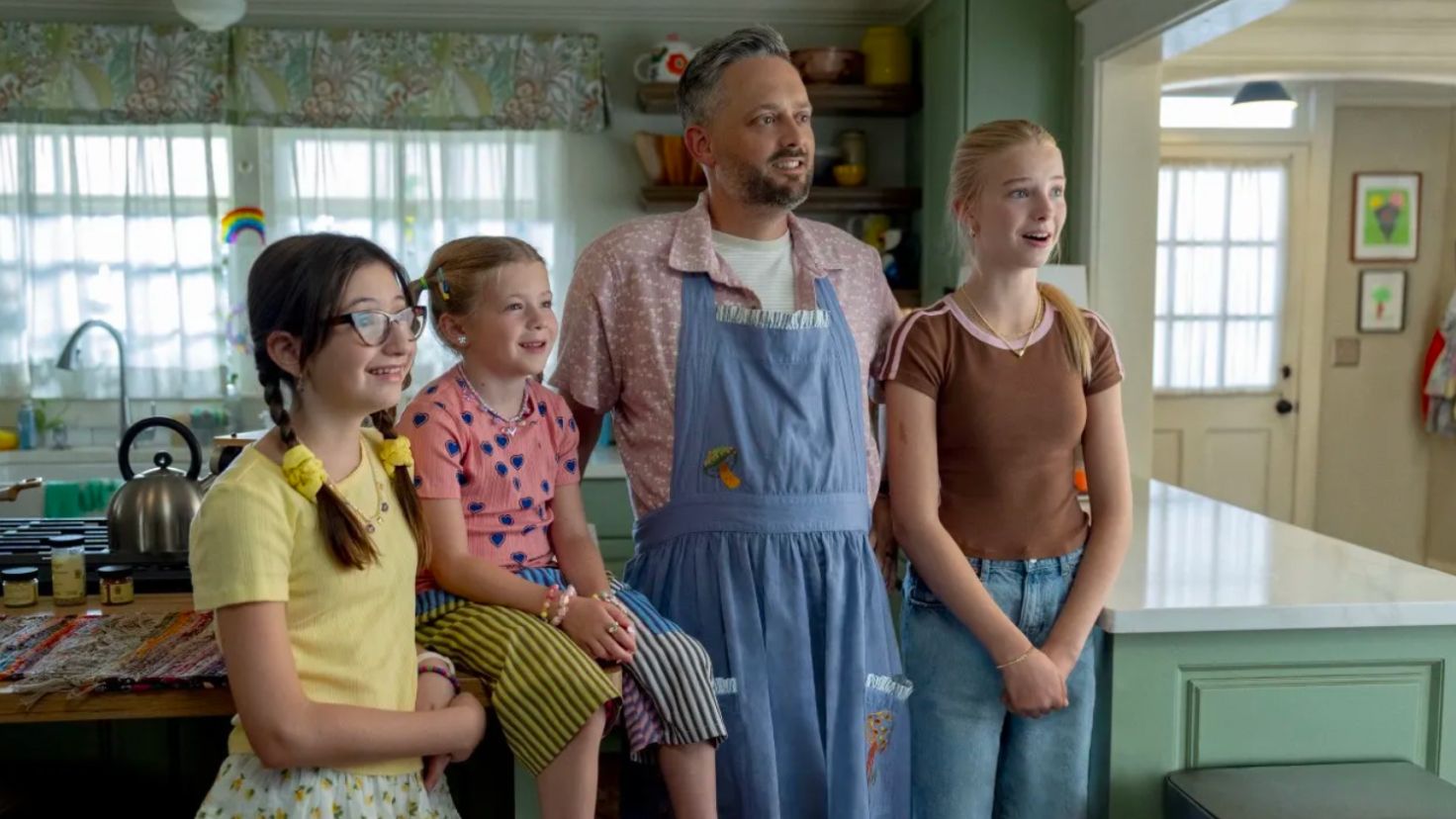
There is a running joke in family comedies, and The Breadwinner, the Nate Bargatze film currently in theaters, delivers it with a straight face: mom handles everything, dad flounders when left in charge. It is a familiar setup, and it lands because it references something real about how domestic labor has historically been distributed.
But most people who go see it this summer know a dad who does not fit that script. A dad who is up at night running the family calendar in his head. He knows which kid has a form due Friday and which one needs new cleats. He tracks the finances, coordinates carpool, and tries to be fully present at bedtime after a full day of work. He is not the punchline. He is just not the story that gets told.
This piece is an attempt to tell it. Not to compete with or diminish the very real load that mothers carry, which research consistently shows is substantial and often invisible. But to recognize that fathers are carrying something too, that the conversation benefits everyone when it includes them, and that the families who figure out how to share the load tend to do better, together.
The Numbers Behind the Father's Mental Load
We talk a lot about the mental load mothers carry, and the data backs it up. The same 2025 USA Today and Peacock survey that documented fathers' experiences also found that 34% of women feel overwhelmed every single day, and that half of mothers say the rest of the family assumes it is their job to fix things when something goes wrong. That is a heavy, daily weight, and it deserves to be named.
The less-told part of the same survey: roughly 1 in 3 fathers reported feeling burned out or emotionally exhausted. The same share said they feel overwhelmed by constant decision-making. One in five said parenting has cost them a sense of personal identity.

Alex Shoemaker, a father who wrote about the survey for Parents.com in December 2025, described his own version of the mental load with a story that will resonate for a lot of dads: he caught himself skipping pages during his son's bedtime story because his mind was already on the finances he needed to review afterward. He felt guilty immediately.
"That's what the mental load looks like for me. Not blowing up or failing in some big way, just cutting corners in quiet moments because too many things are piling at the same time." (Alex Shoemaker, Parents.com, December 2025)
These are not the numbers of a generation of disengaged fathers. They are the numbers of parents who are trying hard, carrying a lot, and often doing it without language for what they are carrying or community to talk it through with.
What Fathers Are Actually Managing
The mental load fathers carry tends to look different from what mothers carry, but it is no less real. It tends to cluster around a few consistent themes.
Financial pressure and provider guilt
For many fathers, financial worry operates as a kind of background process that never fully closes. It is the thing that pulled Shoemaker's attention away from his son's bedtime story. Across the USA Today and Peacock survey, financial anxiety was among the most commonly reported stressors for fathers, particularly when it intersects with provider guilt: the persistent feeling that no amount of earning or planning is quite enough.
Safety and future anxiety
38% of fathers in the survey reported anxiety about their child's safety or future. This kind of worry is low-visibility. It does not appear on a task list, but it occupies real cognitive load and bandwidth, often in the hours when the rest of the house is asleep.
Work-family conflict
74% of fathers in the survey said parenting responsibilities affect their job performance. The reverse is equally true: work demands cut into presence at home, and for many fathers, that trade-off produces a persistent, low-grade guilt. Dads in Business, a publication focused on working fathers, described it as "squeezing emotional labour into your lunch hour," and noted that the benchmark for adequate fatherhood has shifted while the hours in the day have not.
Logistics and the "I thought you had pickup" problem
Fatherly has written about "remembering to remember" as one of the core stressors for involved fathers: tracking appointments, school events, activity schedules, and form deadlines across multiple children. This is the exact domain where the movie dad in The Breadwinner falls apart on screen. It is also where a lot of real fathers put in significant, quiet effort that rarely gets counted — and where a shared family calendar and clear ownership of household to-dos prevent the scheduling conflicts that derail a week.
Isolation and the missing community for dads
22% of fathers in the survey said they feel isolated or lack social support. That number matters. The cultural expectation of fatherhood does not leave much room to say: I am carrying a lot and I do not really have anyone to talk to about it. The absence of community for fathers is not a personal failing. It is a structural gap, and it is worth closing.
The Story We Keep Telling About Dads

The Breadwinner is a 2026 film. The incompetent-stay-at-home-dad premise is getting a theatrical release and an audience right now, in the same year that a major survey is showing a third of fathers reporting burnout. The trope and the reality exist simultaneously, and the gap between them has consequences.
When the cultural story about dads centers on cluelessness, it makes it harder for them to ask for help without feeling like they are confirming the joke. And it leaves partners, often mothers who are already carrying a heavy load themselves, without a full picture of what the other person is managing.
A thread posted in the r/daddit community on Reddit asked whether anyone talked about how heavy the mental load could be for fathers. Within minutes, it had 236 comments. Not tips or solutions. Just other fathers saying: yes, I recognize this. Nobody talks about it.
That silence does not serve anyone. Not the fathers who need acknowledgment. Not the mothers who benefit from a partner who has the language and permission to show up more fully. Not the children, who notice more than adults assume.
Paternal Postpartum Depression: The Mental Health Piece That Usually Gets Left Out
There is one part of the paternal mental load that goes almost entirely undiscussed: paternal postpartum depression.

Research published in PMC, the National Institutes of Health's open-access journal, puts the prevalence of paternal postpartum depression at roughly 8 to 10 percent among new fathers. It is significantly under-detected, in part because the clinical conversation and support systems around postpartum mood disorders have been built almost entirely around mothers.
Fathers experiencing postpartum depression often do not have a name for what they are feeling. They do not have a community pointing them toward support, and they are operating in a culture that does not expect them to struggle in this particular way. The exhaustion, identity shift, and financial pressure of early parenthood are not exclusively maternal experiences. They are human ones.
If any of this resonates personally, there are real resources. Postpartum Support International (postpartum.net, helpline: 1-800-944-4773) serves fathers as well as mothers and runs a free weekly online support group specifically for dads and partners. The National Alliance on Mental Illness (nami.org, helpline: 1-800-950-6264) offers peer support programs for anyone experiencing sustained anxiety, burnout, or depression.
What Actually Helps Reduce the Mental Load
The research is better at naming the problem than prescribing solutions. Below are a few approaches that come up most consistently in dad communities and from fathers who have written honestly about this.
Name the load before you try to manage it
Before any system or tool, the most important step tends to be the simplest: naming what you are carrying, to yourself, to your partner, or to another parent. The r/daddit thread described above did something that a productivity app cannot. It made the invisible visible. That brain dump is usually where things start to shift.
Do an honest chore audit with your partner
Fatherly recommends a chore audit: both partners independently list every recurring task they believe they own, then compare. What almost always emerges is a mismatch in perception rather than a mismatch in values or effort. Couples who do this exercise tend to have more productive conversations about rebalancing than couples who try to negotiate from competing memories. The goal is shared clarity, not a scorecard.
Find your peer group
The r/daddit and r/predaddit communities on Reddit are active spaces where fathers discuss the real texture of parenthood. For in-person connection, City Dads Group (citydadsgroup.com) has chapters across the United States and hosts regular meetups. Having other parents, not just a partner, who understand the weight of it makes a measurable difference.

Reframe what asking for help means
Research on how fathers respond to household management messaging consistently finds that competence and optimization framing lands better than self-care framing. A father who builds better household systems is not admitting he cannot cope. He is running the operation more effectively. That reframe matters both internally and in how partners raise the conversation without it becoming a point of conflict.
Tools and Resources to Help Manage the Mental Load
No single tool eliminates the mental load. But there are resources, both human and digital, that meaningfully reduce it.
For mental health support
Postpartum Support International (postpartum.net, helpline: 1-800-944-4773) has specific resources for fathers and partners, including a free weekly online support group for dads. The National Alliance on Mental Illness (nami.org, helpline: 1-800-950-6264) has peer support programs for anyone experiencing sustained anxiety, burnout, or depression.
For rebalancing the load with a partner
Eve Rodsky's book Fair Play offers one of the more practical frameworks for couples trying to move from a chore audit into a durable operating agreement. It breaks down the full scope of household and family work into discrete ownership areas and gives both partners a shared language for negotiating who carries what. The companion card deck makes it usable in short sessions.
For community
City Dads Group (citydadsgroup.com) has chapters across the United States for fathers who want in-person peer connection. The r/daddit and r/predaddit communities on Reddit serve a similar function online, with active, honest threads on everything from logistics to the emotional dimensions of fatherhood that rarely come up elsewhere.
Ohai: a family app for household logistics and coordination
Ohai (ohai.ai) is a human-backed AI household management tool built for the kind of coordination load this piece describes. You interact with O, the household manager, by text, voice, or app. By learning family routines and preferences, Ohai takes over the cognitive heavy lifting parents usually manage. O automates time-consuming administrative chores such as scanning school emails or scanning documents for important dates and populating them directly into a shared family calendar. Beyond scheduling, O helps organize grocery lists and family to-dos, sets necessary reminders, and provides a daily briefing so everyone is aligned on the day's plan. In addition, this family app features integrations with more than 80,000 school calendars and connects with Instacart for seamless grocery delivery.
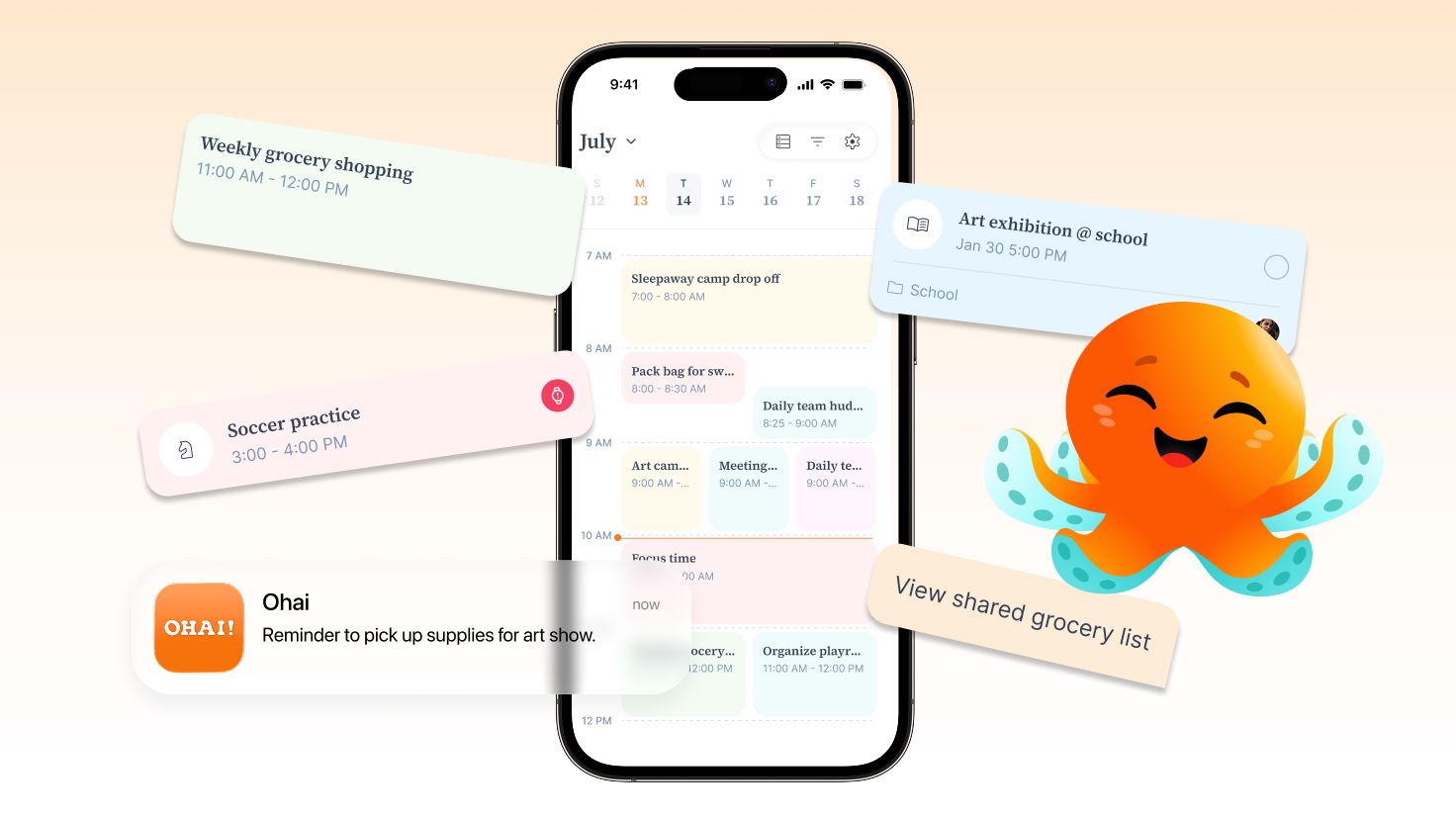
To ensure a smooth start, onboarding support is provided — and because Ohai is human-backed, real people help you set things up and step in when something needs a human touch. Users can choose a free version or opt for a premium membership starting at $10 monthly for more comprehensive support. Implementing a straightforward, affordable app like this helps maintain synchronization across the household and fosters a more balanced distribution of responsibilities, even involving the children in the process.
While no technology can substitute for open communication between partners regarding the division of labor, these systems make it significantly easier to sustain a balanced arrangement for the long term.
Self-Assessment: A Cognitive Load Checklist for Parents
If you are uncertain about the extent of the responsibilities you manage, use the following checklist to help bring your invisible labor into focus. Reflect on which of these tasks apply to a typical week in your life:
- Monitoring the school calendar for field trips, deadlines, and key dates
- Staying on top of activity, school, and PTA email updates
- Synchronizing pickup and drop-off schedules with your partner
- Handling lists for groceries and essential household supplies
- Organizing medical visits and necessary follow-up care for each child
- Remembering which child requires specific gear for their various activities
- Coordinating grocery deliveries or planning the week's meals
- Ensuring registration forms and permission slips are completed on time
- Staying aware of family finances and managing recurring monthly bills
- Navigating persistent background worries regarding your children's future, health, or safety
- Monitoring your children's emotional states and flagging when something seems off
- Managing the household's social calendar, birthdays, and family obligations
These questions aren't intended as a scorecard or a way to keep track of who does "more." Instead, try using this list as a starting point for an open conversation with your partner. Pick a quiet moment to sit down together and review these items — not to critique current habits, but to build a clearer picture of your shared reality. By simply acknowledging which of these tasks are currently being managed by whom, you're taking the first step toward managing a family with a more balanced, sustainable, and transparent system.
Both Parents Deserve to Feel Seen
The conversation about mental load has always been, at its heart, about recognition and partnership. Mothers have fought hard to make their invisible labor visible, and that work matters. The next chapter of that conversation is not a competition. It is an invitation for fathers to join it.

When both parents can name what they are carrying, see what the other is carrying, and build systems that share the weight more evenly, everyone benefits. The household runs better. The partnership gets stronger. And nobody is skipping pages at bedtime because their mind is somewhere else.
That is the goal. Not a perfect system. A more honest, more shared one.
If better household management tools would help get there, ohai.ai is worth a look. And if the weight has been feeling heavier than usual lately, the communities and resources listed are a good place to start.
Frequently Asked Questions About Fathers and Mental Load
Do dads really experience mental load, or is it mainly a mom issue?
Both parents experience mental load, though research shows it tends to look different. A 2025 USA Today and Peacock survey found that roughly 1 in 3 fathers report burnout or emotional exhaustion, and 74% said parenting affects their job performance. The same survey documented that mothers carry a disproportionate share of household anticipation and coordination work. Acknowledging what fathers carry is not a competition with mothers' experience. It is an expansion of the conversation that ultimately makes shared household management more urgent.
How does The Breadwinner film connect to the real experience of fathers?
The Breadwinner is a 2026 comedy starring Nate Bargatze and Mandy Moore built around a role-reversal premise: mom becomes the breadwinner, dad struggles at home. It plays the clueless-dad trope for laughs, and it lands because the archetype is recognizable. But the same year the film is in theaters, survey data shows a third of real fathers reporting burnout. The cultural story and the lived reality are not the same story.
What is paternal postpartum depression and how common is it?
Paternal postpartum depression is a clinically recognized condition. Research published in PMC (National Institutes of Health) puts prevalence at roughly 8 to 10 percent among new fathers. It is significantly under-detected because clinical support systems for postpartum mood disorders have been built primarily around mothers. Postpartum Support International (postpartum.net) has specific resources for fathers and runs a free weekly online support group for dads and partners.
How do you split the mental load more fairly as a couple?
The most effective approaches start with transparency rather than blame. Fatherly recommends a chore audit in which both partners independently list every recurring task they believe they own, then compare. Eve Rodsky's Fair Play offers a more structured framework for dividing household work into clear ownership areas. Both work best when the goal is shared clarity rather than keeping score.
What online communities exist for dads?
The r/daddit and r/predaddit communities on Reddit are active, honest spaces where fathers discuss the real experience of parenthood. City Dads Group (citydadsgroup.com) has chapters across the United States for in-person connection. Postpartum Support International also runs a free weekly online support group specifically for fathers and partners.
Is there a connection between mental load and burnout in fathers?
Yes. Research consistently links sustained cognitive overload to burnout symptoms including emotional exhaustion, reduced effectiveness, and loss of personal identity. All three appear in the USA Today and Peacock survey data for fathers. Dads in Business has written about the specific bind: the baseline of what counts as adequate fatherhood has shifted significantly, but recognition and support systems have not kept pace. If burnout symptoms have been present consistently for several weeks, a conversation with a primary care physician is worth having.
Can a household management app actually reduce mental load?
A household management tool does not eliminate the work of running a family, but it can move the tracking, reminding, and coordinating functions out of any one person's memory and into a shared system. When both parents operate from the same calendar, lists, and reminders, a significant source of scheduling conflict closes. Ohai is designed specifically for this. Simpler starting points like a shared family calendar are also genuinely effective for many families.
How do I raise this with my partner without it becoming a conflict?
The chore audit approach from Fatherly is useful here because it depersonalizes the conversation. Rather than starting with a claim about effort or fairness, both partners independently map what they each believe they own, then compare. The gap that almost always appears reveals a mismatch in awareness rather than a mismatch in values. Framing it as a systems problem rather than a character problem tends to open more productive conversations.
What is Ohai and how does it help with family scheduling?
Ohai is a human-backed AI household management tool that can sync and manage family calendars, scan school emails and documents for key dates and action items, manage shared to-dos or lists, set reminders for both parents and kids, and deliver a daily summary of what's ahead. It integrates with over 80,000 school calendars and connects to Instacart for grocery delivery. It is designed to reduce the information overload that falls on any one parent by giving the whole household a shared view and greater collaboration opportunities.
Related Reading
Do I Have ADHD, or Am I Just an Overwhelmed Mom?
Unpacks the overlap between ADHD and everyday parental overwhelm, and what genuinely helps whether or not there is a diagnosis. A useful companion for any parent who feels mentally maxed out.
The Mental Load Checklist: The Invisible Work of Running a Household
A practical inventory of the anticipating, planning, and remembering that keeps a household running. Use the checklist to make that invisible labor visible and easier to share.
Why Moms Are Done Using ChatGPT as a Co-Parent (And Which Tool Actually Works)
Looks at why parents are turning chatbots into "co-parents" to carry the mental load, and why a purpose-built household manager works better for a whole family than a general-purpose AI.
What Is a Beta Mom? The Quiet Shift Reshaping What "Doing It All" Means
Explores the move away from intensive, do-it-all parenting and how loosening that grip creates room to share the load. Directly relevant to rebalancing responsibilities between partners.
Decision Fatigue and the Default Parent
Explains how the constant stream of small daily decisions wears down the default parent, and how offloading routine choices to a shared system protects your mental energy.